NVIDIA Reveals Autonomous Vehicle Platform in Response to Tesla's Full Self-Driving Technology; Insights from Musk and Elluswamy
The major headline at CES was not related to a car but to a groundbreaking development in technology. Jensen Huang, the CEO of NVIDIA, unveiled Alpamayo, a cutting-edge autonomous vehicle platform set to be released later this year. This innovative platform marks a significant advancement in the automotive industry.
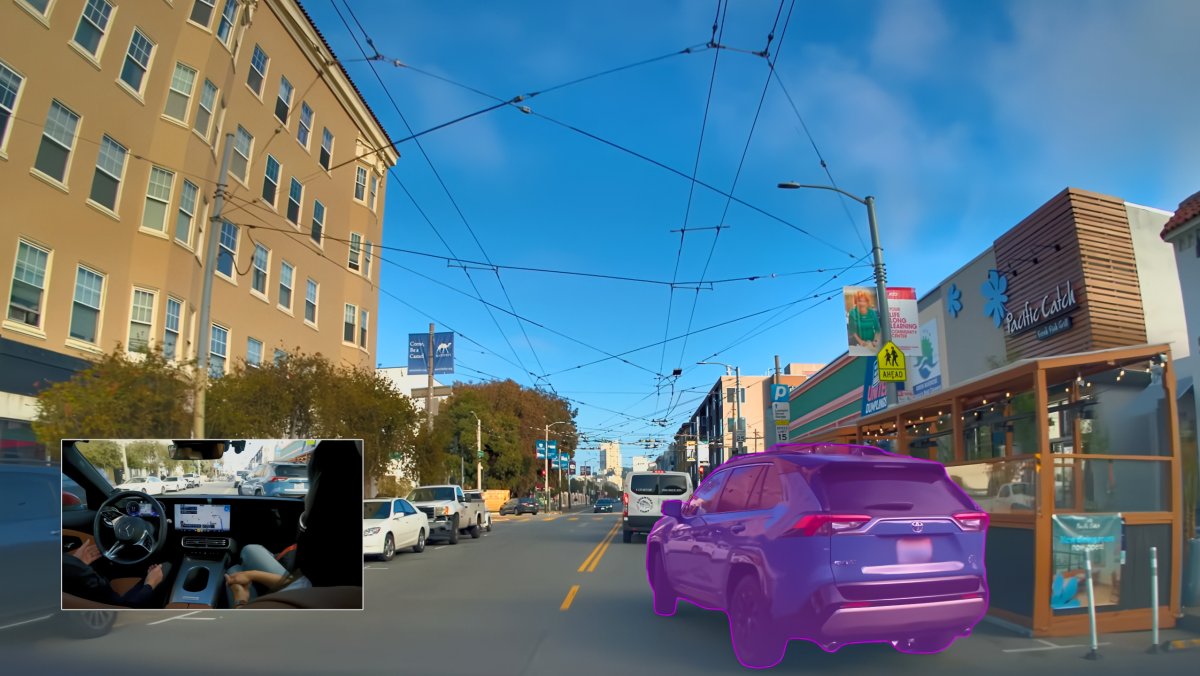
The major highlight of CES was not a vehicle but a groundbreaking development in AI. NVIDIA's CEO, Jensen Huang, unveiled Alpamayo, a new autonomous vehicle platform set to launch later this year.
The inaugural automobile to utilize NVIDIA's cutting-edge autonomous system will be the 2026 Mercedes-Benz CLA. Huang hailed it as a significant advancement in artificial intelligence, emphasizing that it goes beyond reactive responses to proactively thinking and reasoning.
During his CES presentation, Huang elucidated, "It's trained end-to-end, from input via camera to output via actuation. It deliberates on the action it's about to take, the rationale behind it, and the trajectory."
The Alpamayo platform's key proposition lies in its Vision-Language-Action (VLA) model, which can elucidate its decisions with reasoning traces akin to those generated by reasoning LLMs. This transparency addresses the opaque nature of traditional autonomous driving systems.
While the tech industry lauded this innovation, Tesla's team, with extensive experience in end-to-end neural networks across millions of vehicles, offered a pragmatic perspective.
Elon Musk acknowledged and cautioned that NVIDIA's embrace of end-to-end models mirrors Tesla's approach since 2023 with FSD V12. Tesla's early adoption of this method indicates that NVIDIA's transition is a validation rather than a leap forward.
Musk humorously noted, "What they will find is that it’s easy to get to 99% and then super hard to solve the long tail of the distribution."
The crux of the matter isn't about understanding AI but the challenge of perfecting it. Achieving 99% accuracy is achievable, but the last 1% poses the greatest difficulty, encompassing rare scenarios that demand years of training and refinement.
Apart from software hurdles, there's a structural impediment for NVIDIA and its partners who rely on Alpamayo. While NVIDIA supplies chips and software to automakers like Mercedes-Benz, integrating these solutions at scale presents logistical complexities.
NVIDIA's rollout of Alpamayo on the Mercedes CLA is expected to be gradual, contrasting Tesla's extensive fleet that continuously gathers crucial data for training neural networks to handle diverse real-world scenarios.
NVIDIA's adoption of Tesla's neural network approach signifies a significant industry shift towards a unified solution. However, success hinges on data acquisition and mastering rare edge cases that challenge reasoning capabilities.
While acknowledging Tesla's advanced autonomous stack, Jensen Huang commended its sophistication and regarded it as the pinnacle in the domain.
The inaugural automobile to utilize NVIDIA's cutting-edge autonomous system will be the 2026 Mercedes-Benz CLA. Huang hailed it as a significant advancement in artificial intelligence, emphasizing that it goes beyond reactive responses to proactively thinking and reasoning.
During his CES presentation, Huang elucidated, "It's trained end-to-end, from input via camera to output via actuation. It deliberates on the action it's about to take, the rationale behind it, and the trajectory."
The Alpamayo platform's key proposition lies in its Vision-Language-Action (VLA) model, which can elucidate its decisions with reasoning traces akin to those generated by reasoning LLMs. This transparency addresses the opaque nature of traditional autonomous driving systems.
While the tech industry lauded this innovation, Tesla's team, with extensive experience in end-to-end neural networks across millions of vehicles, offered a pragmatic perspective.
Elon Musk acknowledged and cautioned that NVIDIA's embrace of end-to-end models mirrors Tesla's approach since 2023 with FSD V12. Tesla's early adoption of this method indicates that NVIDIA's transition is a validation rather than a leap forward.
Musk humorously noted, "What they will find is that it’s easy to get to 99% and then super hard to solve the long tail of the distribution."
The crux of the matter isn't about understanding AI but the challenge of perfecting it. Achieving 99% accuracy is achievable, but the last 1% poses the greatest difficulty, encompassing rare scenarios that demand years of training and refinement.
Apart from software hurdles, there's a structural impediment for NVIDIA and its partners who rely on Alpamayo. While NVIDIA supplies chips and software to automakers like Mercedes-Benz, integrating these solutions at scale presents logistical complexities.
NVIDIA's rollout of Alpamayo on the Mercedes CLA is expected to be gradual, contrasting Tesla's extensive fleet that continuously gathers crucial data for training neural networks to handle diverse real-world scenarios.
NVIDIA's adoption of Tesla's neural network approach signifies a significant industry shift towards a unified solution. However, success hinges on data acquisition and mastering rare edge cases that challenge reasoning capabilities.
While acknowledging Tesla's advanced autonomous stack, Jensen Huang commended its sophistication and regarded it as the pinnacle in the domain.