Tesla Launches New Safety Hub Detailing Why Its Vehicles Are Safer
Tesla has unveiled a redesigned Safety page on its website, offering a comprehensive overview of how its vehicles protect occupants—as well as other people and objects in their surroundings.
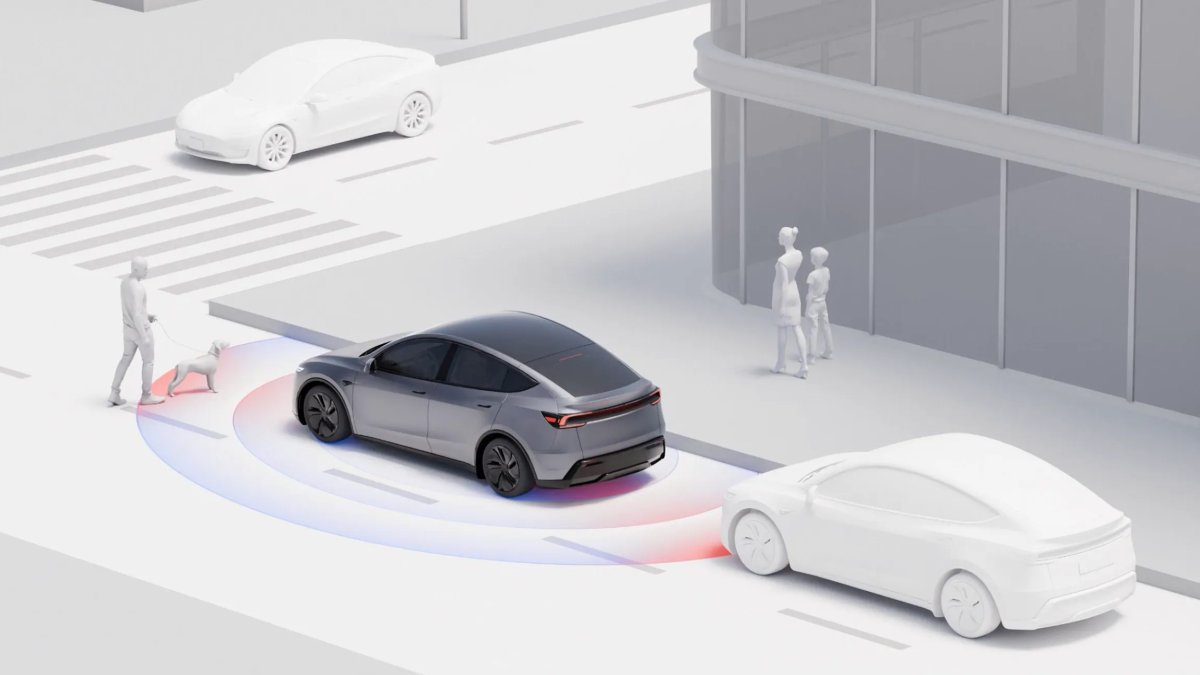
Tesla has debuted an updated Safety page on its website that consolidates years of crash-test results, active-safety features, statistics, and explanatory diagrams into a single, user-friendly hub. Positioned alongside the recently released FSD Safety hub, this resource is intended to give customers and prospective buyers a clear view of how Tesla vehicles protect occupants and other road users.
Occupants, road users, and wildlife
In a post on X announcing the page, Tesla emphasized that its safety focus extends beyond occupants to include other road users—pedestrians and cyclists—and wildlife. Highlighting animals explicitly underscores the capabilities of Tesla’s vision-based active safety systems to detect and respond to animals of varying sizes, often faster than a human driver can at night.
The hardware
The Passive Safety section explains the physical engineering designed to protect occupants in a crash. Key elements include the floor-mounted battery pack, which lowers the vehicle’s center of gravity and substantially reduces rollover risk, and the absence of an internal combustion engine up front, which creates larger crumple zones to absorb impact energy before it reaches the cabin. The page also details patented side-sill structures that absorb energy and protect both occupants and the battery pack.
Additional features—far-side airbags, active venting, and camera-based seat-belt pre-tensioning—contribute to occupant protection, making Tesla vehicles among the safest in the world in crash scenarios.
The software
Tesla stresses that preventing crashes is the primary goal: the safest crash is no crash at all. Active Safety features are standard across the lineup, reinforcing that safety is not optional. The suite includes Automatic Emergency Braking (AEB), which continues to be refined to detect vehicles, pedestrians, and cyclists and to reduce or mitigate collisions, and Lane Departure Avoidance, which steers the vehicle back into lane if it begins to drift.
Other software functions include Obstacle-Aware Acceleration, which cuts motor torque at low speeds when an obstacle is detected ahead, and Forward Collision Warnings (which will soon be disputable through Tesla Insurance). Features such as Dynamic Brake Lights—rapidly flashing during sudden stops—Park Assist, Blind Spot Monitoring, Drowsiness Detection, and Autoshift further reduce the risk of incidents by alerting drivers or intervening when necessary.
Safer aftermath
Tesla’s safety measures extend after a crash is detected. On a serious collision, the vehicle will automatically activate hazard lights, unlock the doors, and, in some regions, place an emergency call and transmit information to first responders to expedite assistance.
Fire safety
The new page also addresses public concern about vehicle fires. Tesla presents data showing its vehicles are roughly ten times less likely to catch fire per mile driven than the average ICE vehicle. The company explains the battery’s passive thermal protection system, which is designed to direct heat away from the cabin in the unlikely event of structural damage, reinforcing the assertion that EV architecture reduces fire risk relative to vehicles that carry tanks of flammable fuel.
Real-world data
Tesla’s Safety hub prominently features its quarterly safety reports comparing miles driven per accident when Autopilot (and FSD) is engaged to the U.S. average for manually driven vehicles. The most recent reports show that supervised FSD users experience collisions far less frequently than the national average for human drivers. By presenting this data, Tesla frames its safety claims in measurable, real-world terms rather than as abstract promises.
Occupants, road users, and wildlife
In a post on X announcing the page, Tesla emphasized that its safety focus extends beyond occupants to include other road users—pedestrians and cyclists—and wildlife. Highlighting animals explicitly underscores the capabilities of Tesla’s vision-based active safety systems to detect and respond to animals of varying sizes, often faster than a human driver can at night.
The hardware
The Passive Safety section explains the physical engineering designed to protect occupants in a crash. Key elements include the floor-mounted battery pack, which lowers the vehicle’s center of gravity and substantially reduces rollover risk, and the absence of an internal combustion engine up front, which creates larger crumple zones to absorb impact energy before it reaches the cabin. The page also details patented side-sill structures that absorb energy and protect both occupants and the battery pack.
Additional features—far-side airbags, active venting, and camera-based seat-belt pre-tensioning—contribute to occupant protection, making Tesla vehicles among the safest in the world in crash scenarios.
The software
Tesla stresses that preventing crashes is the primary goal: the safest crash is no crash at all. Active Safety features are standard across the lineup, reinforcing that safety is not optional. The suite includes Automatic Emergency Braking (AEB), which continues to be refined to detect vehicles, pedestrians, and cyclists and to reduce or mitigate collisions, and Lane Departure Avoidance, which steers the vehicle back into lane if it begins to drift.
Other software functions include Obstacle-Aware Acceleration, which cuts motor torque at low speeds when an obstacle is detected ahead, and Forward Collision Warnings (which will soon be disputable through Tesla Insurance). Features such as Dynamic Brake Lights—rapidly flashing during sudden stops—Park Assist, Blind Spot Monitoring, Drowsiness Detection, and Autoshift further reduce the risk of incidents by alerting drivers or intervening when necessary.
Safer aftermath
Tesla’s safety measures extend after a crash is detected. On a serious collision, the vehicle will automatically activate hazard lights, unlock the doors, and, in some regions, place an emergency call and transmit information to first responders to expedite assistance.
Fire safety
The new page also addresses public concern about vehicle fires. Tesla presents data showing its vehicles are roughly ten times less likely to catch fire per mile driven than the average ICE vehicle. The company explains the battery’s passive thermal protection system, which is designed to direct heat away from the cabin in the unlikely event of structural damage, reinforcing the assertion that EV architecture reduces fire risk relative to vehicles that carry tanks of flammable fuel.
Real-world data
Tesla’s Safety hub prominently features its quarterly safety reports comparing miles driven per accident when Autopilot (and FSD) is engaged to the U.S. average for manually driven vehicles. The most recent reports show that supervised FSD users experience collisions far less frequently than the national average for human drivers. By presenting this data, Tesla frames its safety claims in measurable, real-world terms rather than as abstract promises.