Tesla Engineer Suggests Drivers May Soon Be Able to Provide FSD Feedback Without Disengaging the System
Tesla’s Full Self-Driving (FSD) team has developed a reputation for being highly responsive to user feedback on X, and a recent exchange suggests they may be preparing a feature that lets drivers submit feedback without having to disengage the system.
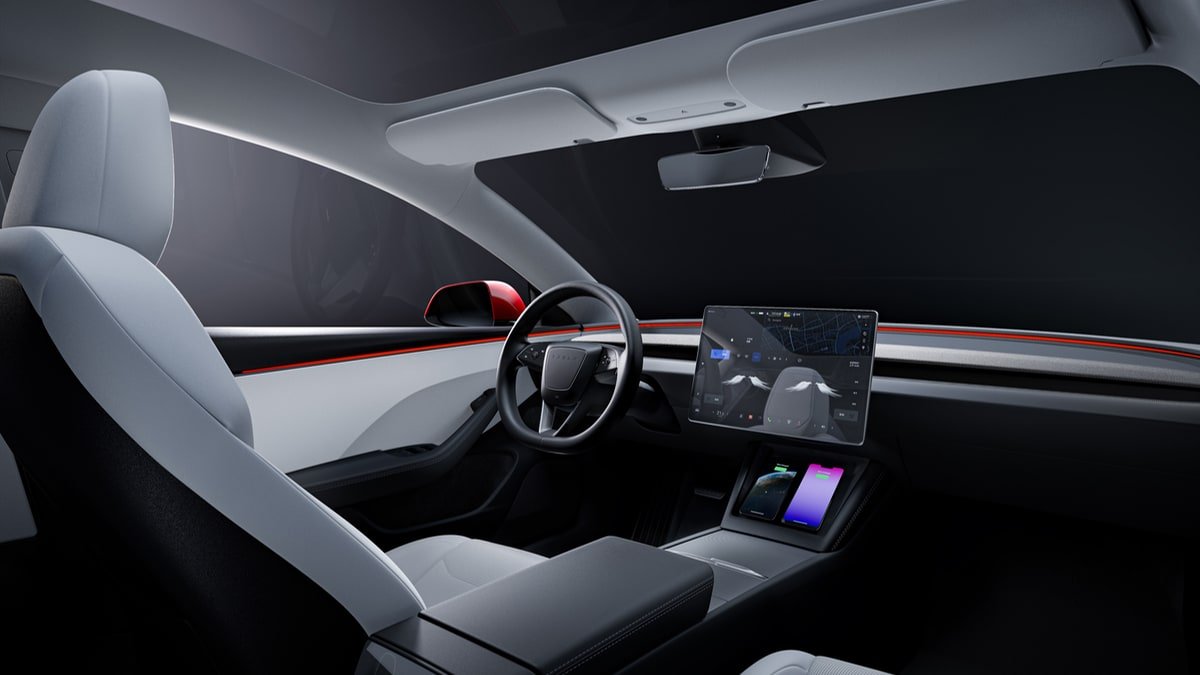
Tesla’s FSD team is highly responsive to user feedback on X, and a recent exchange suggests a new capability may be under consideration: leaving voice feedback without disengaging FSD.
A Tesla owner asked on X whether users could record an FSD voice note while the system remained engaged. Yun-Ta Tsai, a Tesla senior AI engineer who has confirmed voice notes are reviewed, replied simply, “Noted.” While not a confirmation of an upcoming release, the response shows the AI team is monitoring community input and recognizes the value of this idea.
Why in-drive feedback matters
At present, Tesla’s Voice Note prompt appears only after the driver disengages FSD—when a takeover occurs via braking, pressing the button, or turning the wheel. After disengagement a “What happened?” prompt appears on screen, and drivers can press the right scroll wheel to record a short audio explanation.
That workflow misses many non-critical but important issues. In recent FSD builds, drivers frequently don’t intervene for so-called soft failures—situations that are incorrect or annoying but not dangerous—because they want to see whether the car corrects itself. When no takeover happens, the car assumes everything was fine and no feedback path is offered. Examples include:
- Incorrect lane selection
- Driving too slowly or hesitantly
- Taking an odd path through an intersection
- Failing to return to the passing lane
This creates a paradox: as FSD improves and requires fewer interventions, the amount of actionable user feedback on remaining edge cases shrinks, making it harder to identify and fix subtle quality issues.
Bringing back “Snapshot”
Tesla already has a precedent for non-disruptive feedback. Internal testers, employees, and some early-access users have a camera icon in the UI that flags the current moment and uploads a snapshot of vehicle data to engineering—without canceling FSD. Restoring or expanding that capability for public users would provide rich, contextual data about comfort, confidence, and planning—metrics that raw telemetry struggles to capture. In short, it would shift part of the evaluation from “Did we crash?” to “Did we drive well?”
A Tesla owner asked on X whether users could record an FSD voice note while the system remained engaged. Yun-Ta Tsai, a Tesla senior AI engineer who has confirmed voice notes are reviewed, replied simply, “Noted.” While not a confirmation of an upcoming release, the response shows the AI team is monitoring community input and recognizes the value of this idea.
Why in-drive feedback matters
At present, Tesla’s Voice Note prompt appears only after the driver disengages FSD—when a takeover occurs via braking, pressing the button, or turning the wheel. After disengagement a “What happened?” prompt appears on screen, and drivers can press the right scroll wheel to record a short audio explanation.
That workflow misses many non-critical but important issues. In recent FSD builds, drivers frequently don’t intervene for so-called soft failures—situations that are incorrect or annoying but not dangerous—because they want to see whether the car corrects itself. When no takeover happens, the car assumes everything was fine and no feedback path is offered. Examples include:
- Incorrect lane selection
- Driving too slowly or hesitantly
- Taking an odd path through an intersection
- Failing to return to the passing lane
This creates a paradox: as FSD improves and requires fewer interventions, the amount of actionable user feedback on remaining edge cases shrinks, making it harder to identify and fix subtle quality issues.
Bringing back “Snapshot”
Tesla already has a precedent for non-disruptive feedback. Internal testers, employees, and some early-access users have a camera icon in the UI that flags the current moment and uploads a snapshot of vehicle data to engineering—without canceling FSD. Restoring or expanding that capability for public users would provide rich, contextual data about comfort, confidence, and planning—metrics that raw telemetry struggles to capture. In short, it would shift part of the evaluation from “Did we crash?” to “Did we drive well?”