Tesla Rolls Out Centralized Payment Kiosks for V4 Supercharger Stations
Tesla appears to be quietly implementing a significant change at its new V4 Supercharger stations: replacing individual credit-card terminals with a centralized payment hub. Recent photos confirm the rollout.
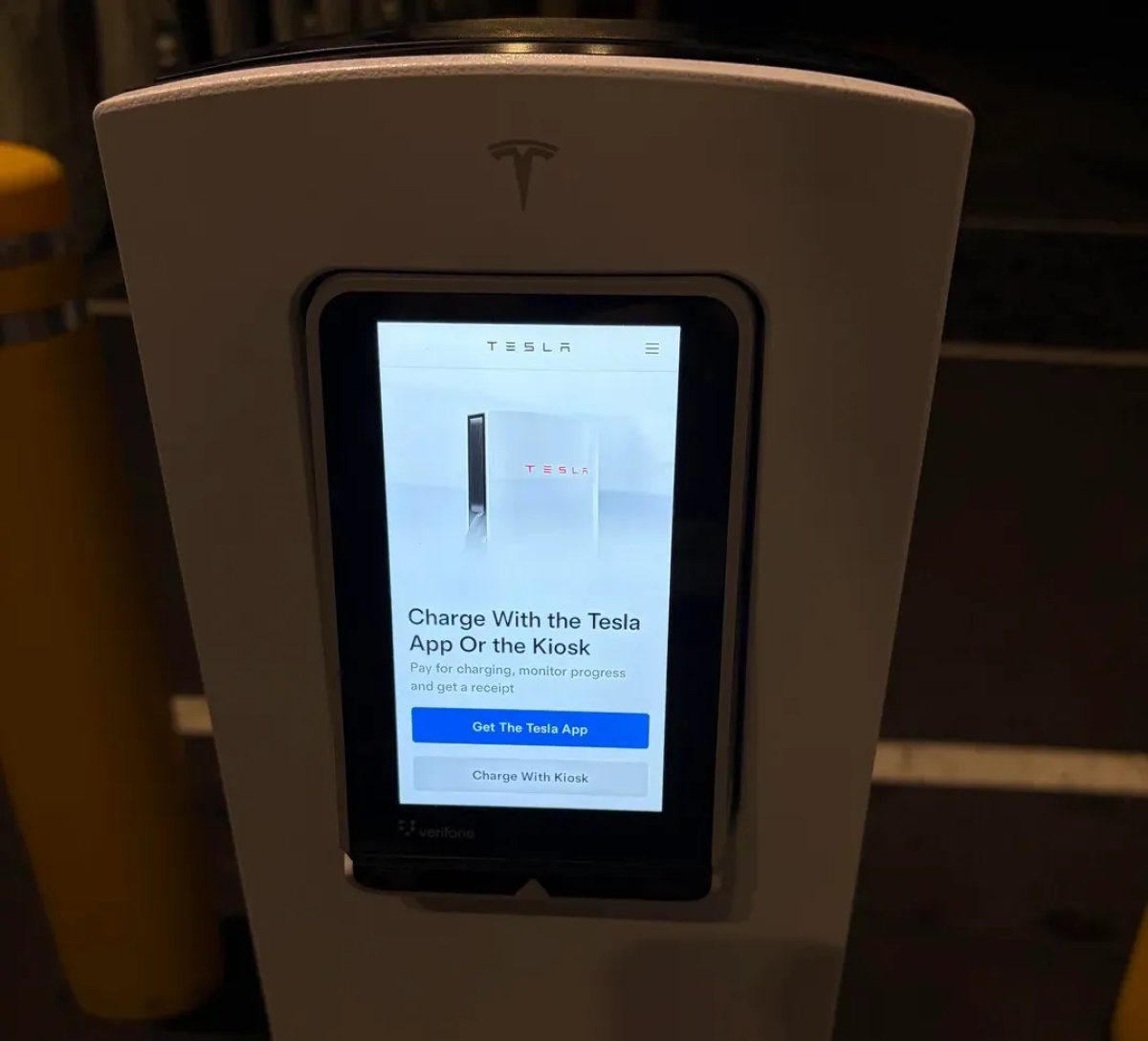
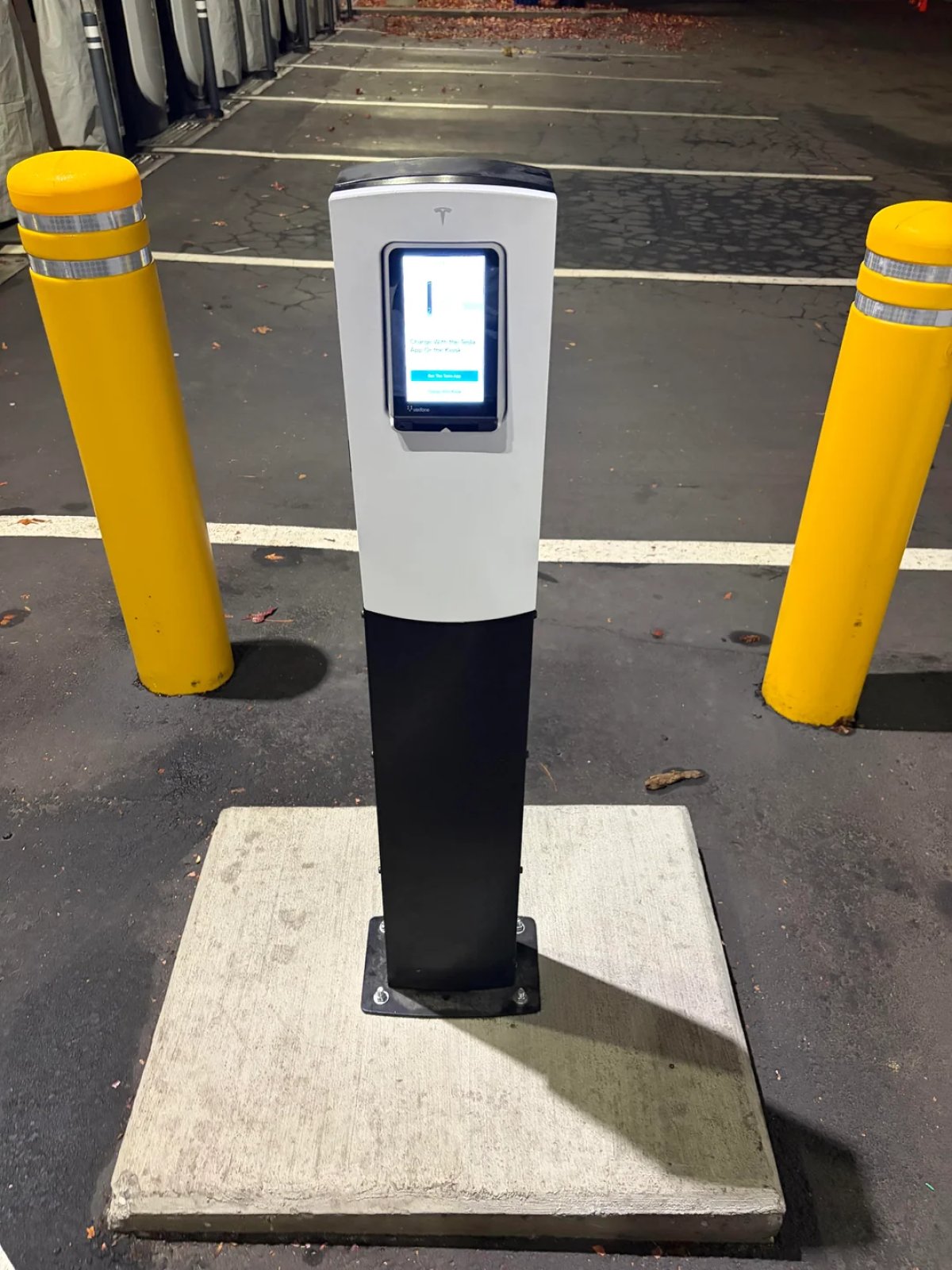
Tesla appears to be quietly changing the payment design at some new V4 Supercharger sites by replacing individual contactless card readers at each stall with a single, centralized payment kiosk serving the entire charger cluster.
The new centralized experience
Until recently, each V4 stall included a small screen and a contactless card reader to comply with regulations (for example, the US NEVI program and similar European rules) requiring on-site payment options for drivers who prefer not to use an app. At several newly opened locations, those per-stall readers are absent. Instead, a standalone pedestal with a large touchscreen now handles card payments for the whole group of chargers.
How it works
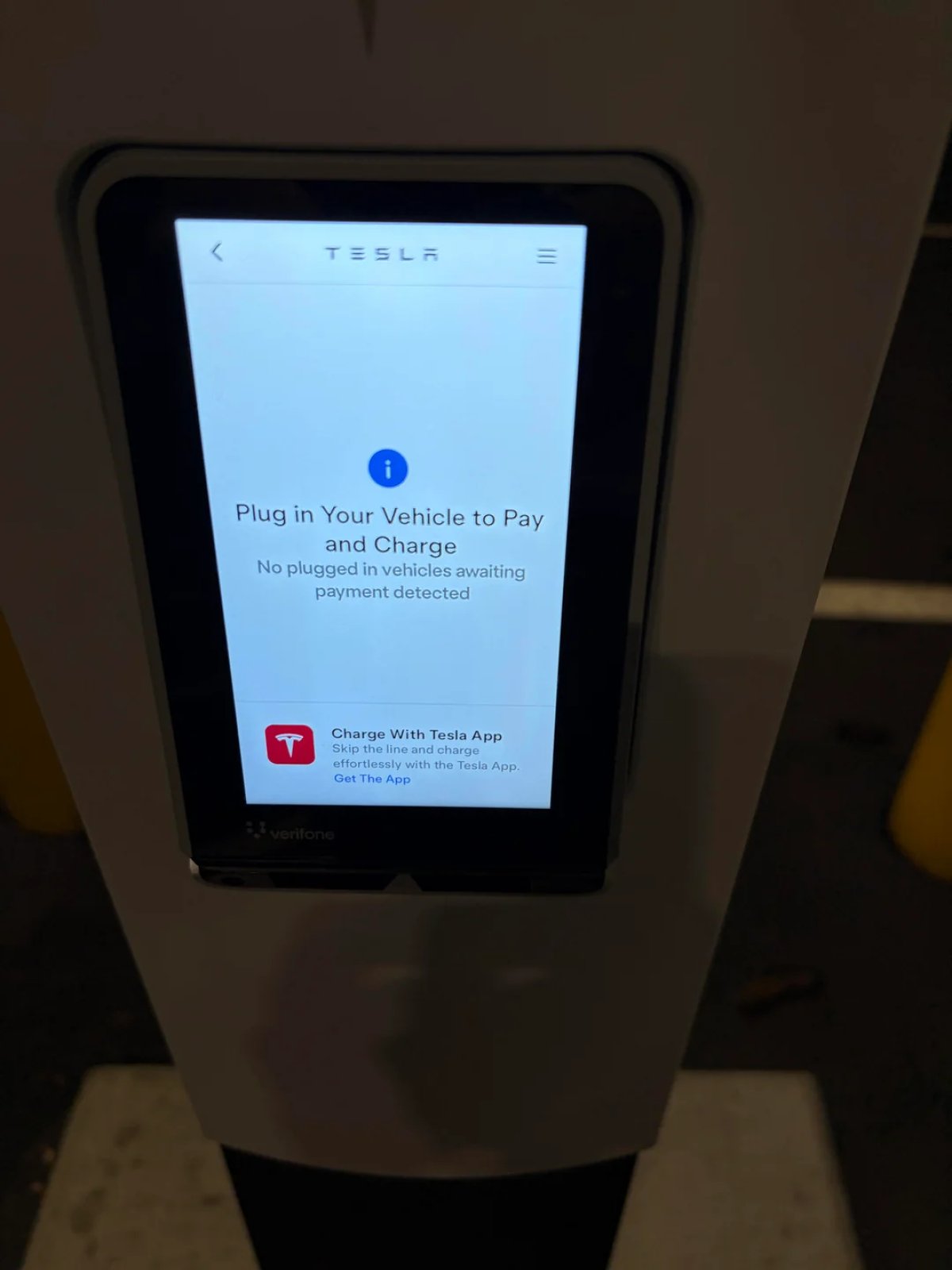
Drivers who want to pay by card walk to the central kiosk and are prompted to plug in their vehicle. The terminal detects a plugged-in car that has not started a session via the app and then allows the user to pay at the kiosk to authorize charging. The kiosk also provides session monitoring.
Higher kiosk pricing
An early report from a driver who used this system indicates kiosk prices were roughly double the existing Tesla app rate. Tesla already charges higher rates for non-Tesla vehicles, while the Supercharging Membership or using the Tesla app typically restores lower, in-network pricing. Kiosk-initiated sessions appear to be billed at a non-member or pay-as-you-go rate—similar to other networks that offer account-based and subscription discounts.
By offering on-site card payment but setting it at a materially higher price, Tesla meets minimum legal requirements while strongly encouraging drivers to download the app and create an account.
Why Tesla is likely making the change
Consolidating payment hardware into one central kiosk reduces maintenance overhead and build costs. Contactless readers mounted on individual posts are more prone to damage and failure; maintaining a single, robust terminal is simpler and less expensive than supporting dozens of high-security payment modules across a station. This approach allows Tesla to comply with regulations while lowering hardware and upkeep expenses.
The new centralized experience
Until recently, each V4 stall included a small screen and a contactless card reader to comply with regulations (for example, the US NEVI program and similar European rules) requiring on-site payment options for drivers who prefer not to use an app. At several newly opened locations, those per-stall readers are absent. Instead, a standalone pedestal with a large touchscreen now handles card payments for the whole group of chargers.
How it works
Drivers who want to pay by card walk to the central kiosk and are prompted to plug in their vehicle. The terminal detects a plugged-in car that has not started a session via the app and then allows the user to pay at the kiosk to authorize charging. The kiosk also provides session monitoring.
Higher kiosk pricing
An early report from a driver who used this system indicates kiosk prices were roughly double the existing Tesla app rate. Tesla already charges higher rates for non-Tesla vehicles, while the Supercharging Membership or using the Tesla app typically restores lower, in-network pricing. Kiosk-initiated sessions appear to be billed at a non-member or pay-as-you-go rate—similar to other networks that offer account-based and subscription discounts.
By offering on-site card payment but setting it at a materially higher price, Tesla meets minimum legal requirements while strongly encouraging drivers to download the app and create an account.
Why Tesla is likely making the change
Consolidating payment hardware into one central kiosk reduces maintenance overhead and build costs. Contactless readers mounted on individual posts are more prone to damage and failure; maintaining a single, robust terminal is simpler and less expensive than supporting dozens of high-security payment modules across a station. This approach allows Tesla to comply with regulations while lowering hardware and upkeep expenses.