NHTSA Launches Investigation into Tesla’s Emergency Door-Release System
The National Highway Traffic Safety Administration (NHTSA) has opened a defect investigation into approximately 179,000 Model 3 vehicles, focusing on concerns that the emergency door-release mechanism may fail to operate properly.
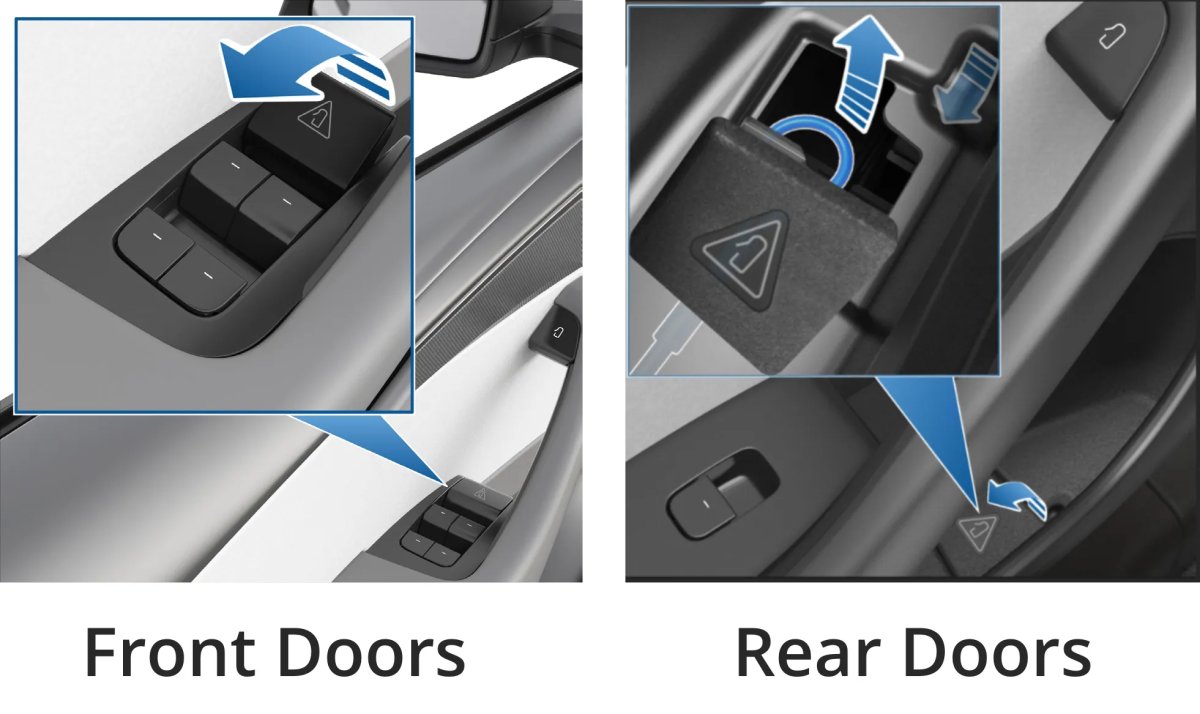
The National Highway Traffic Safety Administration (NHTSA) has opened a defect investigation into roughly 179,071 2022 Tesla Model 3 vehicles, examining whether the emergency door release is difficult to locate or operate during an incident.
The investigation
Launched by NHTSA’s Office of Defects Investigation on December 23, 2025, the probe currently targets the 2022 Model 3. Officials warn it may expand to cover additional model years and the Model Y, which uses the same interior and exterior door-handle design. The inquiry was prompted by consumer complaints describing the mechanical emergency release as “hidden, unlabelled, and not intuitive to locate during an emergency.”
The filing cites a 2023 Georgia incident in which Kevin Clouse became trapped in a burning vehicle after an electrical failure. Unable to find the emergency release, he broke a rear passenger window to escape and sustained a broken hip and arm.
This action is a preliminary evaluation rather than a recall; however, if NHTSA determines a safety-related defect exists in Tesla’s design, it could lead to further regulatory enforcement.
Growing scrutiny
The investigation comes amid increased attention on Tesla’s use of electronic door latches and the accessibility of mechanical backups. In November 2024, the family of two victims in a Model S crash filed suit alleging the electronic door release failed after battery damage, trapping occupants. Similar lawsuits were later filed following a November 2024 Cybertruck crash, with families asserting that door-handle design impeded escape.
Global regulatory pressure
Scrutiny is not limited to the United States. China has proposed regulations requiring clearly visible, easy-to-find mechanical releases for both interior and exterior electronic door handles, mandating accessible mechanical backups on both sides of the door.
Design response
Tesla appears to acknowledge the concern and is considering design changes. In a September interview, Tesla design chief Franz von Holzhausen said the company is exploring a single interface that would combine manual and electronic door releases and comply with safety requirements across regions, including the U.S. and China.
The investigation
Launched by NHTSA’s Office of Defects Investigation on December 23, 2025, the probe currently targets the 2022 Model 3. Officials warn it may expand to cover additional model years and the Model Y, which uses the same interior and exterior door-handle design. The inquiry was prompted by consumer complaints describing the mechanical emergency release as “hidden, unlabelled, and not intuitive to locate during an emergency.”
The filing cites a 2023 Georgia incident in which Kevin Clouse became trapped in a burning vehicle after an electrical failure. Unable to find the emergency release, he broke a rear passenger window to escape and sustained a broken hip and arm.
This action is a preliminary evaluation rather than a recall; however, if NHTSA determines a safety-related defect exists in Tesla’s design, it could lead to further regulatory enforcement.
Growing scrutiny
The investigation comes amid increased attention on Tesla’s use of electronic door latches and the accessibility of mechanical backups. In November 2024, the family of two victims in a Model S crash filed suit alleging the electronic door release failed after battery damage, trapping occupants. Similar lawsuits were later filed following a November 2024 Cybertruck crash, with families asserting that door-handle design impeded escape.
Global regulatory pressure
Scrutiny is not limited to the United States. China has proposed regulations requiring clearly visible, easy-to-find mechanical releases for both interior and exterior electronic door handles, mandating accessible mechanical backups on both sides of the door.
Design response
Tesla appears to acknowledge the concern and is considering design changes. In a September interview, Tesla design chief Franz von Holzhausen said the company is exploring a single interface that would combine manual and electronic door releases and comply with safety requirements across regions, including the U.S. and China.